
This month, I worked on shipping two fun things: an AI-powered Wapuu image generator, and a platformer game hidden inside WordPress Studio. The occasion was Radical Speed Month – a one-month internal experiment at Automattic where two-person teams get full autonomy to build and ship without the usual approval chain. I paired with Antonio Sejas, and we made the most of it.
We decided to build Wapuu Studio – an AI-powered Wapuu image creator. You can type a prompt, get a Wapuu, publish it, and download it. It is completely free and doesn’t require any design skills.
Wapuu Studio
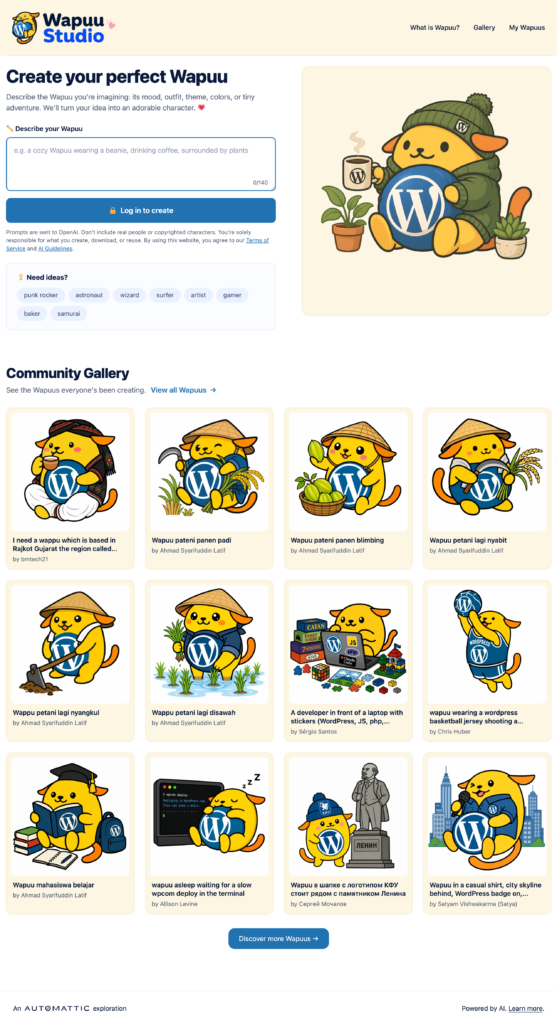
We kicked off the project in WordPress Studio, using Studio Code to create a quick prototype. After confirming the model and flow choices, we migrated the project to the A8c infrastructure, started iterating on features we considered as MVP must-haves, and kicked off sanity checks with legal and marketing teams, as legal and trust & safety considerations still applied.
We enjoyed working on the project and learned a lot about engineering products that use foundation models. It was a great opportunity to practice those skills in a real-world scenario, especially after reading Chip Huyen’s AI Engineering book. The book helped introduce AI engineering and foundation model basics, improved my understanding of AI flows, provided a practical model evaluation methodology, and helped design prompt moderation and secure prompts against injections.
Prompt validation flows were an important learning: you can use a cheaper model to validate the prompt, rely on special moderation endpoints provided by OpenAI for that purpose, or use a mix of both. However, the biggest takeaway was to carefully consider how to craft the prompt, as, due to the natural language used in prompts, injections are much harder to detect than in structured code like SQL.
Another nice find was that when you work on a smaller team with more autonomy, you can move faster and see the effects almost immediately. I hope we can work in a radical way more often.
I’m curious to see how the site will evolve, how we will integrate it with other parts of the WordPress ecosystem, and how users will use it. We have many ideas. We will listen to internal and community users and will definitely dedicate time to the project in the future.
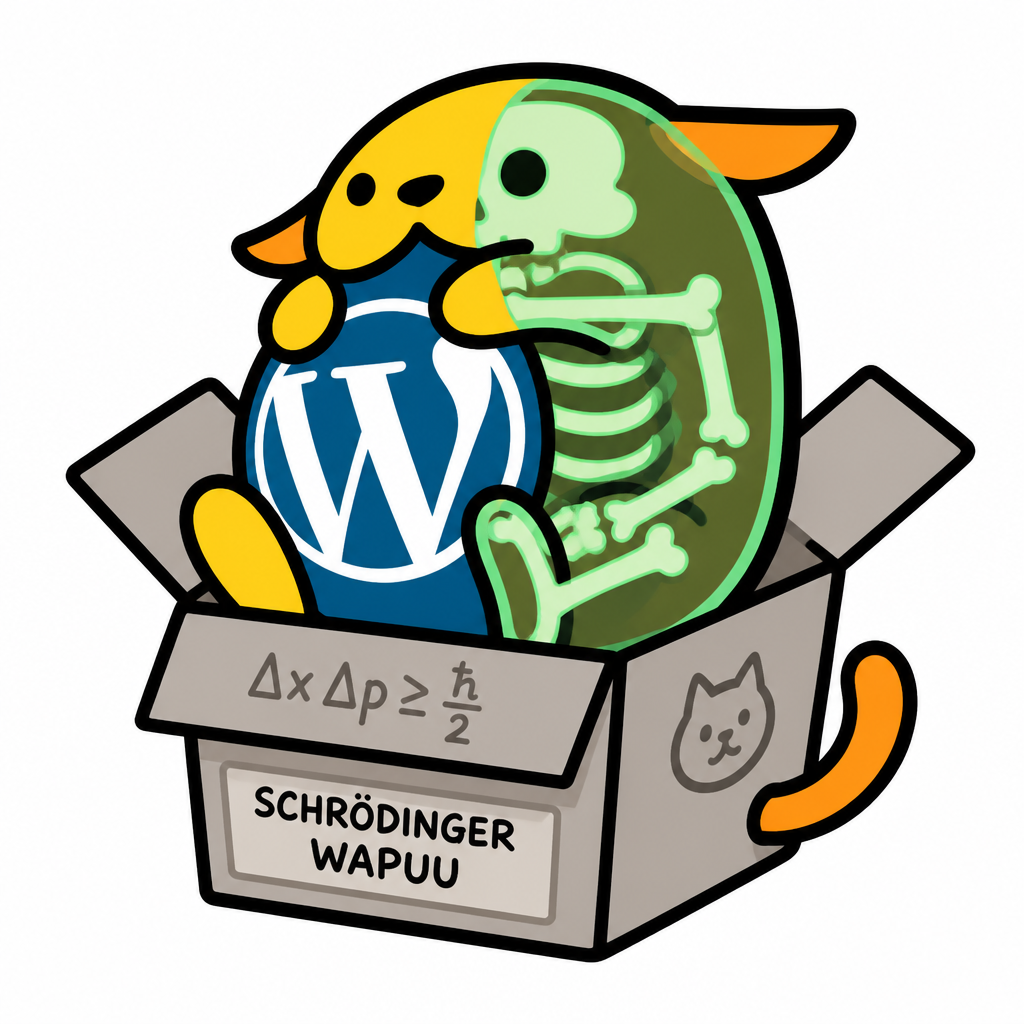
Try it at wapuu.studio and share your creations. See also My Wapuus gallery and a few of my recent Wapuus:









Wapuu World
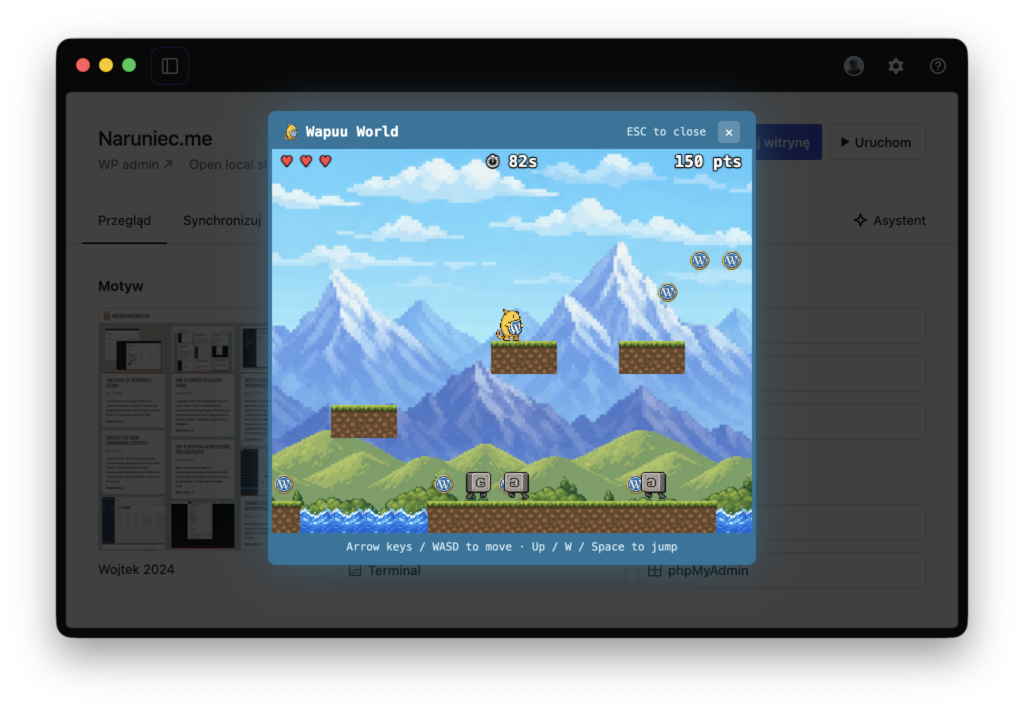
I always wanted to create and publish a video game. Also, after two years of development, WordPress Studio was still missing an easter egg. I went ahead and, as a bonus task for the project, created a short platformer game where you play as Wapuu and fight Gutenberg blocks.
I used AI-assisted coding to create the game. Claude Code was really good at writing the game engine, implementing physics, and creating temporary canvas elements before I created sprites. It was able to fix bugs effectively, but it required a good description of the current undesired behavior – e.g., incorrectly handled double jump, unfair hitboxes, etc.
AI was not that good at preparing graphic assets, though. Although the gpt-image-2 model could create beautiful backgrounds or sprite systems, they were not usable in an 8-bit game at all. The model was unable to create pixel art at all, as it defaulted to high resolutions, thereby producing fake pixel art. Then, AI, trying to design move animation frames, was producing quirky effects. Remember the 6-finger hands?
However, with semi-manual flow the effect was good:
- Generate a base image using the OpenAI Platform → Images and download when happy with the result.
- Crop to subject – cut out the single sprite or animation subject, removing whitespace around it. Any image editor works (e.g., Preview, Figma).
- Convert to real pixel art – open in Unfaker to turn AI-generated “fake” pixel art into proper pixel art.
- Edit frames and export – Open the result in Piskelapp, split animation frames, remove the background, align all frames consistently, then export as a sprite sheet (PNG, horizontal strip)
See the longer guide in the Studio repository.
If you are curious, download the latest version of WordPress Studio and use the Konami code: ↑↑↓↓←→←→BA. Share your top score in the comments. Mine is 5260 so far.
Leave a Reply